
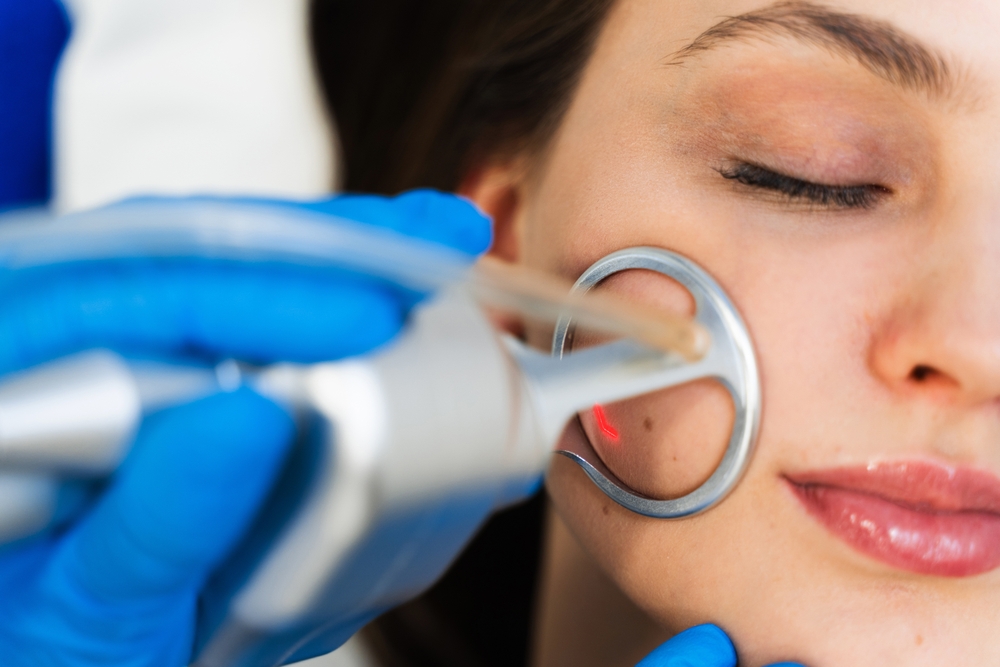
From fine lines and wrinkles to hyperpigmentation, laser skin resurfacing can do wonders for your complexion.
The question is, how do you choose between ablative vs non‑ablative lasers? Keep reading for what experts want you to know for unbeatable rejuvenation!
What Laser Skin Resurfacing Is and How It Works to Address a Range of Stubborn Insecurities
Laser resurfacing is a non-surgical cosmetic procedure that uses targeted light technology to improve the appearance of your skin.
It achieves this result by removing damaged skin cells and promoting natural collagen induction. This is helpful for creating a both healthy and youthful-looking complexion.
This treatment can address various cosmetic concerns. This includes acne scars, enlarged pores, fine lines, sun damage, surgical scars, sagging skin, warts, and wrinkles.
It can also fade the appearance of hyperpigmentation, as well as improve your overall skin tone and texture. While it’s commonly performed on the face, it can also treat your chest, hands, and neck.
Differences Between Ablative vs Non‑Ablative Lasers, and Why Your Choice Matters
There are many different types of laser systems but they can be organized into two categories: ablative and non-ablative.
Ablative lasers, such as Erbium or carbon dioxide (CO2), remove the external layers of your skin.
This type tends to be more aggressive, necessitating a longer recovery time. On the flip side, they are also incredibly effective at managing stubborn and advanced signs of aging like deep wrinkles.
Non-ablative lasers, including fractional lasers, work by heating the underlying skin tissues without affecting the outer layer.
These treatments are gentler with reduced downtime, making them ideal for mild to moderate concerns.
Choosing between the two depends on your specific concerns, desired outcome, and skin type. If you’re particularly busy, recovery time also affects which one is right for you.
A professional consultation will help to determine the best fit for your goals.
How Much Laser Skin Resurfacing Costs and Factors That Affect Pricing
Navigating the cost of ablative vs non‑ablative lasers is another important aspect of your final decision.
On average, you can expect to pay $1,829 for your skin resurfacing procedure. This is for the procedure itself and doesn’t consider unique factors that determine the total cost.
It’s important to consider the type of laser system your provider uses, alongside the complexity of your treatment.
For example, if you require more than one session, you will be paying more money overall.
This fluctuation is why it’s so important to consult with a reputable medical professional. They will walk you through pricing, candidacy, and what you can expect as a whole from laser skin resurfacing.
What to Expect During Recovery and How Soon You Will See Results
The healing period of any cosmetic procedure is important, not to mention a necessary stepping stone to a flawless complexion.
You may experience redness, swelling, sensitivity, and peeling. This is completely normal. It can take up to two weeks for this to subside if you pursue ablative resurfacing.
Non-ablative treatments require minimal downtime, typically a week.
Make sure to follow aftercare instructions given to you by your provider. Use gentle but protective skincare products and limit your sun exposure.
The timeline for results depends on your individual case. Many people see improvement right away, which continues to develop for up to a year after your session.
Begin Your Journey to Healthy, Glowing Skin at Generations Medical Aesthetics!
Take the next step and explore your options for wrinkle-fighting, youth-restoring treatments! Our team is here to help you defeat your complexion woes once and for all with personalized laser skin resurfacing.
Contact us now at 703-439-1104 to set up your consultation!