
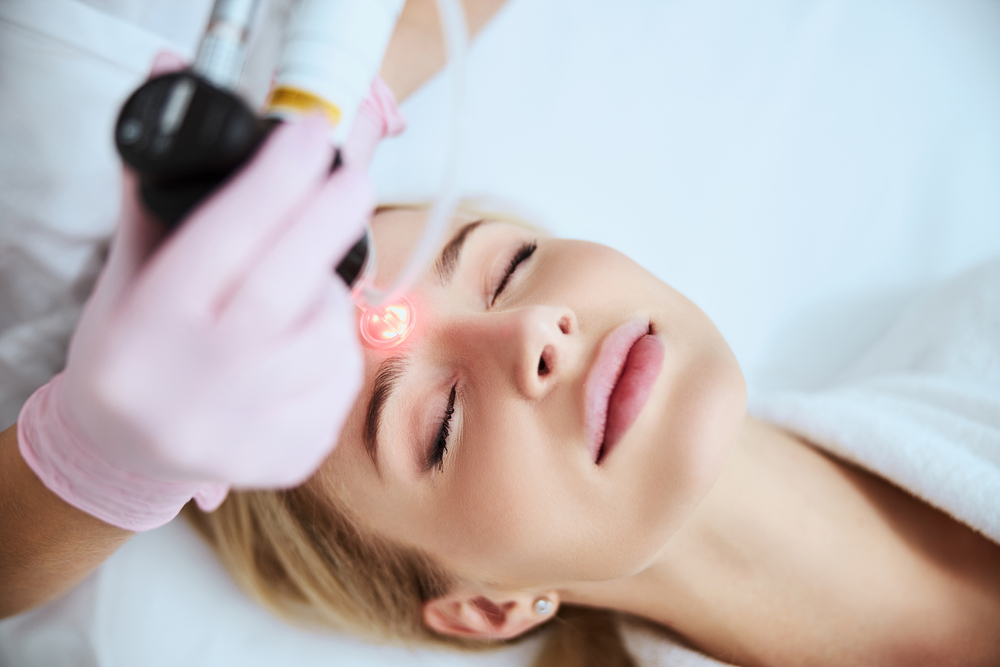
From brown spots and sun damage to fine lines and wrinkles, laser treatments can rejuvenate your skin unlike any other procedure.
Many individuals, especially patients with deeper skin tones, have concerns about laser resurfacing safety. Keep reading for insider information, including how to prepare to ensure a safe experience!
How Laser Skin Resurfacing Works, the Different Types, and All of Its Benefits
Laser skin resurfacing is a cosmetic procedure that is both non-invasive and surgery-free. It aims to improve skin tone, texture, and overall appearance by using concentrated light energy.
This process removes damaged layers of skin, promotes collagen development, and encourages new cell growth for a healthy complexion.
Thanks to customizable technology, it can treat an extensive range of skin concerns. This includes fine lines, wrinkles, hyperpigmentation, sun damage, and scarring, just to name a few.
There are two primary types of resurfacing: ablative and non-ablative.
Ablative lasers work by removing thin layers of your skin. While they demand a longer downtime, they’re ideal for treating severe issues and offer dramatic results after just one session.
Non-ablative laser rejuvenation heats underlying tissues without damaging the surface. They require less downtime but necessitate multiple sessions in order to treat mild to moderate concerns.
What You Need to Know About Laser Resurfacing Safety and Candidacy
Laser skin resurfacing is safe when performed by a qualified provider after a thorough consultation. A patch test in a discreet area is recommended to gauge how your skin responds to it.
This is one of many protocols performed to select the correct settings based on your skin type.
Patients with medium to deep skin tones should especially take precautions. Typically, non-ablative laser treatments are ideal because they’re not as aggressive.
Candidates for skin resurfacing are healthy adults with realistic but positive expectations.
Active acne breakouts and skin infections impair healing, so wait until these are addressed before you pursue treatment.
Why Your Choice in Provider Matters for a Safe, Successful Treatment
The provider you choose ultimately determines laser resurfacing safety, as well as your final results.
An experienced medical professional will assess your complexion and unique concerns to craft an ideal treatment plan. They will also adhere to strict safety and hygiene standards.
Reputable practitioners are equipped with various laser systems and the knowledge on how to customize them, using the correct type and settings for you.
A poorly performed procedure may lead to burns, uneven pigmentation, or prolonged healing. So, select a provider that truly understands the ins and outs of this service.
How to Prepare for Your Procedure and What to Do for Post-Laser Aftercare
Recovery is as easy as you make it.
Preparation is non-negotiable. Your provider will give you instructions but as a general rule, you should avoid sun exposure. This prevents skin sensitivity.
Certain skincare products, such as retinol, may need to be discontinued in the days leading up to your appointment. Again, this is to minimize sensitivity and promote safety.
Downtime depends on the type of laser used. Redness, itching, stinging, swelling, and peeling are all normal, not to mention temporary! These are simply a stepping stone to a flawless complexion.
Aftercare involves gentle cleansing, avoiding makeup use, and keeping your skin hydrated with mild moisturizers. Protect your skin from UV exposure by diligently applying sunscreen every day.
For Star-Quality Treatments and Professional Guidance, Our Team at Generations Medical Aesthetics Is Here to Help!
Generations Medical Aesthetics is a top-rated practice in Reston that’s proud to showcase our work in our before-and-after gallery.
What are you waiting for? It’s time to join our many satisfied patients and contact us today at 703-439-1104 to schedule your consultation!