
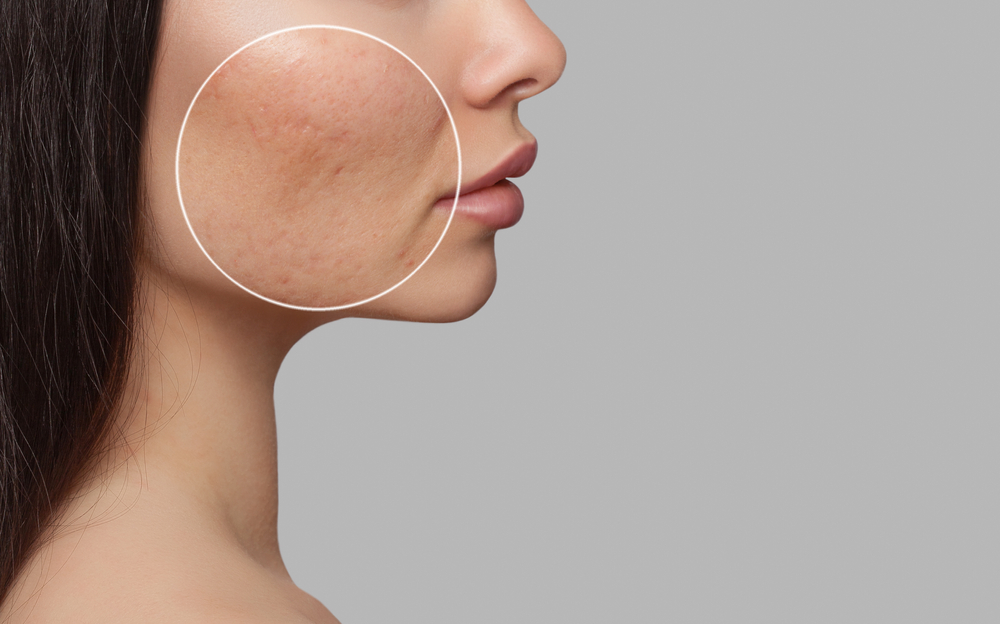
In some cases, acne can result in long-term scarring, causing you to feel insecure even when you’ve treated your breakouts. Fortunately, treatments like microneedling are here to help.
Keep reading for the insider information on laser resurfacing vs microneedling for acne scars, including how to choose the right procedure for you!
What Causes Acne Scars to Form in the First Place, Plus the Different Types of Scarring
Acne scars develop when breakouts manage to damage the deeper layers of your skin. They’re more likely to occur if you experience cysts or nodules.
During healing, your body produces collagen in order to repair blemishes and the inflammation they cause.
If too little collagen forms, depressions or pitted scars can form. Conversely, too much collagen production can create thick, raised scars.
In short, your body is either doing its job too well or not well enough.
There are different types of acne scars, all of which require their own unique treatment plan. They can be categorized as such:
- Atrophic: Flat and shallow scars that look like indentations. This includes boxcar, ice pick, and rolling scars.
Boxcar presents as broad depressions with sharp edges, found most often on your jaw and lower cheeks. Ice pick scars are smaller, looking similar to little pinpricks, and occur on the cheeks.
Rolling scars look wavy with uneven edges and vary in depth.
- Hypertrophic: Hypertrophic scars are raised due to excess collagen production and tissue buildup. While raised, they’re the same size as the pimple that caused them.
The same cannot be said for keloids, which can grow larger than the past breakout. Individuals with a deep skin tone tend to be affected by this form of scarring the most.
What Laser Resurfacing Is and How It Works to Fade the Appearance of Acne Scars
Laser skin resurfacing is a non-invasive procedure that involves the use of concentrated beams of light to remove damaged skin cells. It can also help to stimulate the development of new collagen.
Ablative lasers like CO₂ resurface deeper layers of your skin, making them highly effective for severe scarring. As a result, they require a longer recovery period.
Non-ablative lasers heat your skin without removing any layers, offering a more gentle option with minimal downtime.
How Microneedling Works and What It Can Do to Improve Your Skin
Microneedling is a process that involves creating controlled, micro-punctures in your skin using tiny needles.
These small injuries trigger your body’s natural healing response. They also stimulate powerful collagen and elastin development, helping to fill in recessed scars.
A notable benefit is that microneedling is slightly less aggressive than laser treatments, making it safer for a range of skin tones.
How to Choose Between Laser Resurfacing vs Microneedling for Acne Scars
The only way to confidently decide between these two treatments is to consult with an experienced medical professional.
Laser skin resurfacing is beneficial for deep, extensive, or severe scars, as well as individuals seeking to seek improvement faster.
Microneedling is best suited for mild to moderate scarring, patients with a deeper complexion, or individuals on a bit of a budget.
Ultimately, laser resurfacing vs microneedling for acne scars are rather comparable. They’re also not the only options for effective scar removal.
A consultation gives you the opportunity to explore various treatments, how they can be tailored to you, and achieve your clear skin goals.
Achieve Smooth Skin Without Stress at Generations Medical Aesthetics!
Proudly serving Reston and beyond, Generations Medical Aesthetics is committed to providing star-quality, customized treatments. From microneedling to lasers, we’ve got you covered.
Contact us now at 703-439-1104 to set up your consultation!