
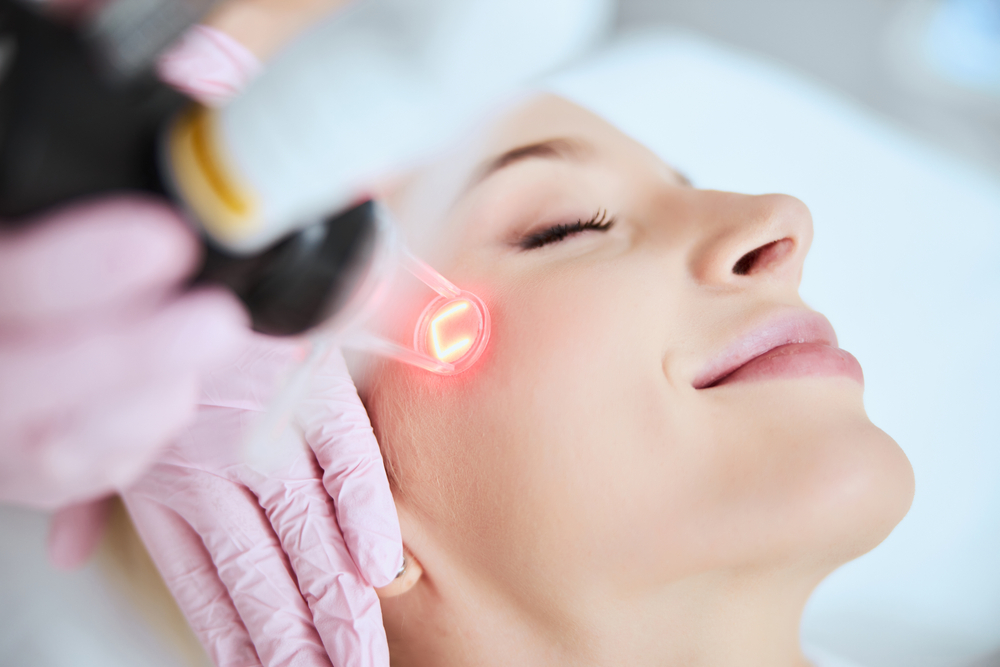
Laser resurfacing is one of the most effective treatments for healing your skin and taking your appearance to the next level. With tried-and-true lasers like fractional CO2, it’s also safe.
Here’s what experts want you to know when it comes to understanding the side effects and recovery of laser skin resurfacing!
Exploring What Laser Skin Resurfacing Is, Including How Its Pros Outweigh the Cons
Laser skin resurfacing is a procedure designed to improve your skin tone and texture, as well as promote a comprehensive radiance.
It achieves this by eliminating damaged skin cells while stimulating the growth of new collagen. Collagen is a protein your body naturally produces to keep your complexion firm, healthy, and youthful.
As you age, you begin to produce this protein increasingly less. Not adhering to a skincare regimen, sun exposure, and unhealthy habits like smoking can exacerbate this.
This causes fine lines, wrinkles, acne scars, enlarged pores, sun damage, skin laxity, and hyperpigmentation. The good news is that laser resurfacing addresses all of these stubborn issues.
There are different types of lasers, all of which are customizable to your one-of-a-kind needs and serve their own purpose.
For example, ablative lasers remove thin layers of your skin, creating dramatic results without surgery. Non-ablative lasers are gentler, heating underlying tissues to tackle your concerns.
Understanding the Side Effects and Recovery of Laser Skin Resurfacing
Like any cosmetic procedure, laser resurfacing comes with potential side effects during the healing phase.
The most common include redness, swelling, itching, stinging, and peeling. It’s similar to a sunburn, making it a bit uncomfortable but ultimately tolerable and temporary.
With ablative lasers, recovery can last approximately two weeks, while non-ablative options may heal within a week. It depends on how you care for your skin during this time.
The bottom line is that it really doesn’t take that long to see the benefits of resurfacing treatments!
Curating a Stress-Free and Streamlined Recovery With These 4 Foolproof Tips
Understanding the side effects and recovery of laser skin resurfacing is one thing, it’s another to commit to aftercare.
Here are four professional-backed tips and tricks for an easy recovery period:
- Follow your provider’s instructions carefully. Your provider will customize the ideal aftercare routine based on your experience, so make sure to adhere to their guidance.
They may prescribe ointments, moisturizers, or antibiotics to protect your skin during healing. Use these and their advice to optimize your results.
- Avoid direct ultraviolet exposure. Ultraviolet (UV) rays are a no-go, before and after laser treatments. Recently treated skin is incredibly photosensitive with an increased risk of burning.
Practice sun safety by wearing sunscreen with SPF 30 or higher, as well as protective clothing to minimize UV exposure.
- Keep your skin clean and moisturized. Gently cleanse with a mild, non-irritating cleanser to eliminate any bacteria.
After, apply a soothing moisturizer approved by your provider to keep your skin healthy and hydrated. Don’t pick or scratch at your skin, no matter how tempting.
- Be patient with your progress. While it’s entirely possible to see improvement early on, it takes time to reap the rewards of laser resurfacing.
It can also take multiple sessions to get the most out of your procedure. Give your body time to naturally renew itself and reveal a smooth, glowing complexion!
Relaxing Treatments and Professional Guidance? Yes, Please—Find It at Generations Medical Aesthetics!
Repairing your skin doesn’t have to be difficult and confusing.
Our experts are here to help you by providing personalized treatment plans, plus all of the information you need to prepare and care for your results!
Contact us now at 703-439-1104 to set up your consultation at our top-rated Reston office!